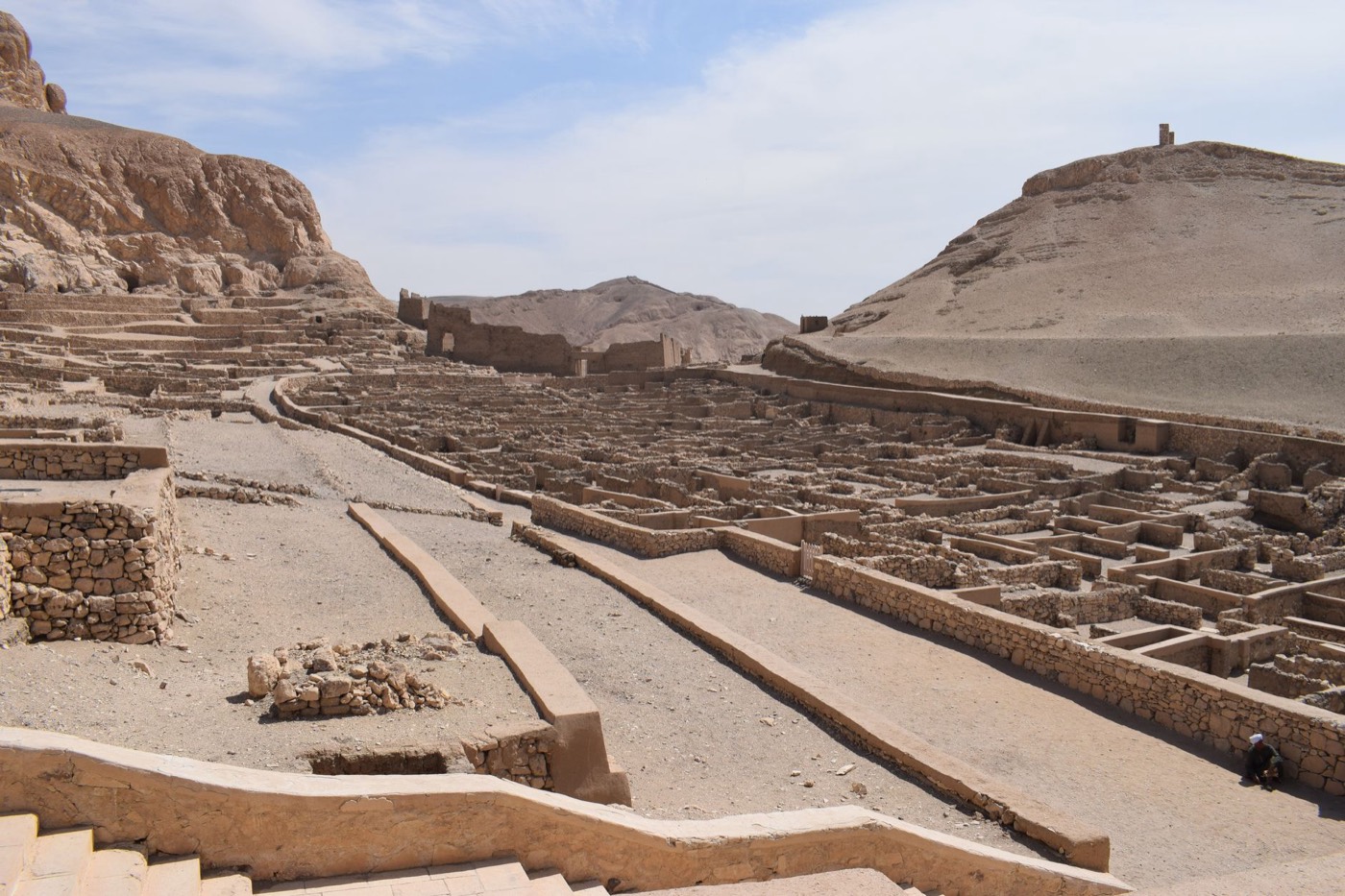
📷 Michelle Chadwick · Pexels
Where in the world
Egypt
The site
Deir el-Medina is an ancient Egyptian workmen's village that housed the artisans who cut and decorated the royal tombs in the Valley of the Kings during the New Kingdom, from about 1550 to 1080 BCE. Its ancient name was Set maat, the "Place of Truth," and its residents were the "Servants in the Place of Truth." Excavations here have produced one of the most thoroughly documented records of daily community life anywhere in the ancient world, spanning nearly four centuries.
Field notes
- civilizations
- Egyptian
- types
- Village · Necropolis
- occupied
- 1,550 BCE — 1,080 BCE
- country
- Egypt
- elevation
- 109 m above sea level
See it in 3D
Notable finds
Renowned pieces unearthed at Deir el-Medina — and where they are today
 archaeological find
The so-called “Turin King List”, with a list of kings written on the verso and an administrative text on the recto▸Museo Egizio
 archaeological find
The so-called “Goldmine Papyrus” with a map of the Wadi Hammamat on the recto and several texts (letters, administrative, and literary) on the verso▸Museo Egizio
 archaeological find
The so-called “Turin Satirical-Erotic Papyrus”▸Museo Egizio
 ostracon
Figured ostracon showing a dancer in an acrobatic position▸Museo Egizio
 manuscript
The so-called “Strike Papyrus” written by Amunnakht▸Museo Egizio
 archaeological find
Papyrus with the plan of the tomb of Ramesses IV on the recto and several administrative texts on the verso▸Museo Egizio
Figures of this place
Laid to rest, born or died at Deir el-Medina
 †
†P✶
Panebborn herechief at Deir el-Medina, a workmen's community at Thebes


