★ UNESCO
World Heritage
World Heritage
📷 Cristian Bagnarello · Pexels
Where in the world
Egypt
The site
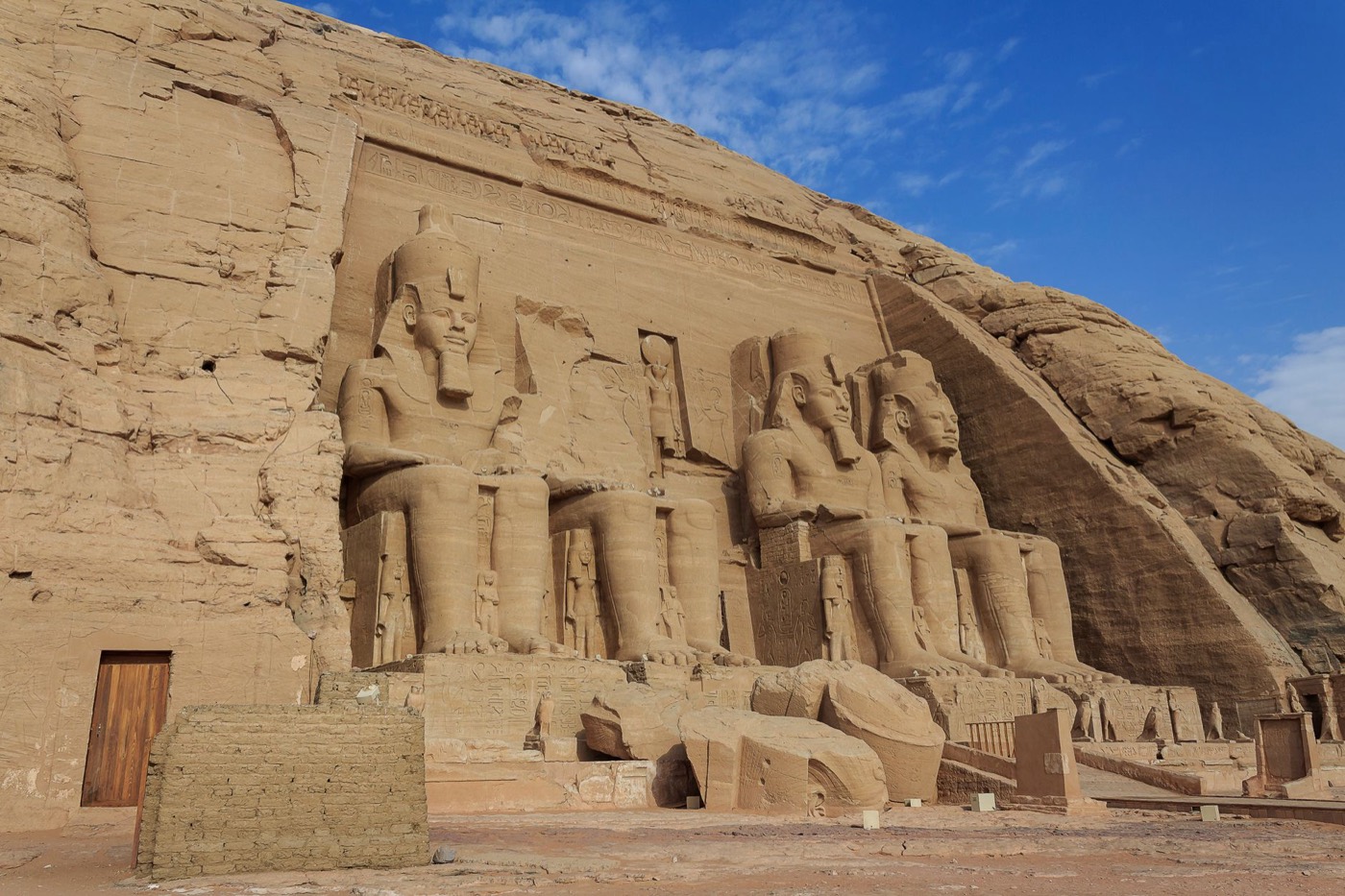
Abu Simbel is a pair of massive rock-cut temples carved into a mountainside in Upper Egypt during the 13th-century BCE reign of Ramesses II. The most arresting feature is the great facade, where colossal seated figures of the pharaoh dominate, with his wife Nefertari and children rendered in smaller relief at his feet. In 1968 the entire complex was cut apart and relocated to higher ground to escape the rising waters of Lake Nasser.
Field notes
- civilizations
- Egyptian
- types
- Temple
- built
- 1,274 BCE — 1,244 BCE
- occupied
- 1,274 BCE — 600 BCE
- country
- Egypt
See it in 3D
Monuments & structures
What stands within Abu Simbel
 archaeological site
Great Temple of Abu Simbel
 archaeological site
Small Temple of Abu Simbel
Pictured through the ages
Artworks that portray Abu Simbel


